
Who we are, where we come from and where we are going. The main objective of the António Pargana Foundation is to reveal to the children, grandchildren and great-grandchildren of Portuguese people the new Portugal, its history, cultural dimension, technological and economic capacity.
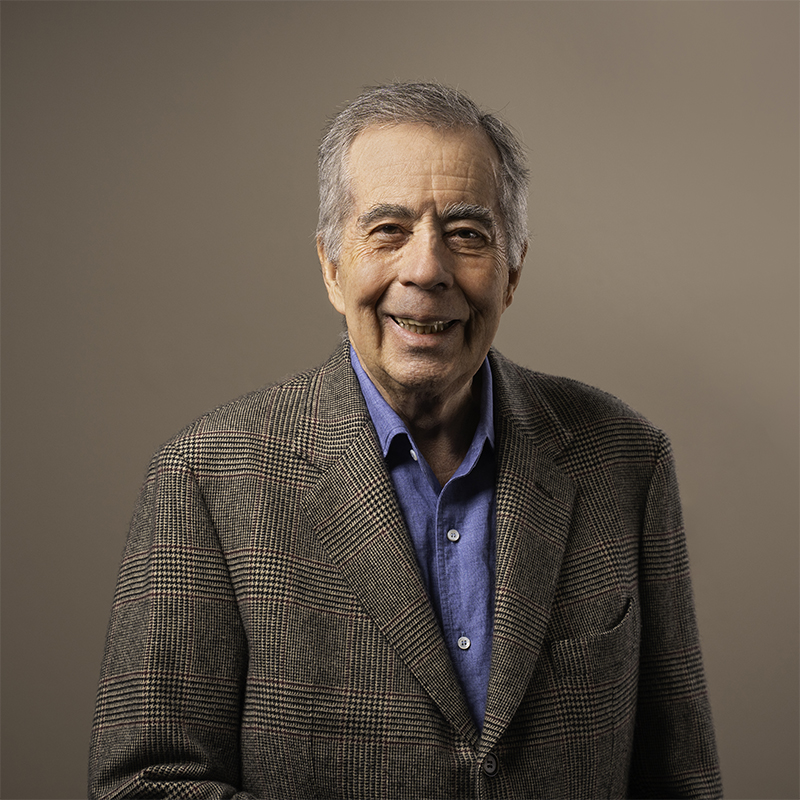

António Pargana
We all have one or more stories. These stories shape who we are. Together, in the complexity of each story, we also tell the story of a country. Through partnerships with universities and other institutions, we aim to strengthen the connection between the diaspora and their descendants to contemporary Portugal, serving as a platform for encounters in the present and future.
I was born in Porto. That’s where my father finished his engineering degree; however, my parents are originally from the Algarve. If you ask me where I’m from, I’ll say I’m from the Algarve. I was four years old when we moved to Mozambique. I started primary school in the village of Guijá-Limpopo.
A few years later, the family returned to Portugal and we chose to live in Lisbon. There I attended Liceu Camões and then the Instituto Superior Técnico (IST). At the end of my first year of university, my father returned to Africa, this time to Angola, and the family joined him. I continued my studies at the University of Engineering in Luanda.
Were you in Angola on April 25? Did the revolution change your life?
In 1972, I was called up for compulsory military service. I was a militia officer in a company based in Benza, in northern Angola, when April 25, 1974 took place, triggering the decolonization process. I left the army immediately. Already married to a student at the Lisbon Faculty of Medicine, I began working in Luanda. In November 1975, just days before Angola’s independence, we returned to Portugal. The newly won freedom was exhilarating, but job opportunities for those seeking their first employment were virtually nonexistent. My life has been driven by necessity. Necessity is the mother of invention, and the April Revolution led me to Brazil, a country that captivated me with its continental scale and the joy and warmth of its people.
Did Brazil offer you a new perspective on life?
As soon as I arrived in São Paulo, I responded to job advertisements published in the Sunday edition of the newspaper O Estado de São Paulo. In less than a week, I started working at a factory in Guarulhos. It was not what I aspired to, but three months later, I joined Cotia Trading, part of the Ovídio Miranda Brito Group, one of Brazil’s largest producers and exporters of beef. I traveled numerous times to Nigeria, Ghana, and Côte d’Ivoire, where we opened commercial offices and made several investments.
Brazil needed to increase its exports and balance its balance of payments. As Commercial Director of Cotia, I closed the first sale of Brazilian fuel ethanol to the United States of America. We signed contracts to sell meat and agricultural commodities to Iraq and began exporting steel and various products to Malaysia, Japan, Korea, and China. Brazil showed me what can be achieved when one thinks big. In 1989, Brazil held its first democratic elections, bringing an end to military rule.
I was able to contribute to changes that transformed Brazil for the better, as I took part in the team that worked on drafting the government program of Fernando Collor de Mello, particularly the New Industrial and Foreign Trade Policy, which eliminated most of the non-tariff barriers inherited from the import substitution period. In 1990, Brazil’s total exports amounted to approximately 31.4 billion US dollars and total imports to around 20.6 billion, with a trade surplus of 10.7 billion. In 2023, Brazilian exports totaled 339.67 billion US dollars and imports 240.83 billion, with a trade surplus close to 100 billion.
Did you assume executive roles in Brazil?
I collaborated in the transition from President Sarney’s government to that of President Collor, coordinating activities in the areas of foreign trade, steel, and transportation. At the Ministry of Infrastructure, I led the transition to the appointed minister, Osíris da Silva. Shortly after the new president took office, I resumed my business activities in São Paulo.
How did democracy in Brazil influence your path as an entrepreneur?
In 1994, together with Olacyr de Moraes, then the world’s largest soybean producer, I founded Dealer, which later became Cisa Trading. From 1997 onward, Cisa, with an expanded base of new investors (notably Fernando Aboudib Camargo, a prominent Brazilian entrepreneur and businessman), increased its sales volume and client base, becoming one of Brazil’s largest international trade companies.
One cannot export without importing. In an increasingly globalized world, industrial production incorporates raw materials and components from multiple origins. The key lies in efficiently combining and maximizing quality products at the lowest possible cost, regardless of where they are produced. Due to its geographical disadvantage — acquiring industrial components produced on continents more than 10 days away by sea and exporting Brazilian products to those same distant destinations — Brazil must competently manage trade flows and logistics.
What were your areas of interest? Which sectors did you consider strategic from a business and personal investment standpoint?
Cisa Trading operated across all major distribution chains, importing vehicles and automotive parts, cosmetics, pharmaceutical products, IT products, machinery and equipment, chemicals, consumer electronics, non-ferrous metals, and steel. It operated private terminals, bonded warehouses, and customs stations, with branches throughout Brazil and abroad (USA and Argentina). It offered logistics, operational, tax, and financial solutions. It handled more than 500,000 items and processed around 100,000 invoices. In 2021, Cisa Trading entered into an association agreement and transferred its client portfolio to Comexport, creating the largest trading company in Brazil. Cisa’s shareholders retained stakes in the businesses they had built.
You built your life around the world without losing your ties to Portugal.
The roots of the Portuguese diaspora lie in the ideal of seeking wealth overseas for Portugal. The main vectors have always been transport and goods. My experience in foreign trade showed me the importance of scale and networks. I am convinced that, with intelligence and proper networking, millions of descendants of Portuguese people can multiply the market size for Portuguese companies, which, with scale, will pursue the same objectives of prosperity, now with updated resources.
You experienced the Diaspora, the Portugal–Africa–Brazil triangle. What do you believe in?
I believe in our ability to undertake and create wealth. And I believe in the fundamental importance of building partnerships. In all the investments I have made, I have partners, some of whom are executives. I believe in and practice profit-sharing with employees. In 2000, we inaugurated Companhia Portuária de Vila Velha (CPVV), a port terminal supporting oil exploration. In 2002, we founded Companhia Energética de Petrolina (CEP), a company generating thermal, hydroelectric, solar, and wind energy. I am also one of the founders of Quanta Geração S.A., a hydroelectric and solar power generation company, and of Companhia Metalúrgica de Paulínia, which controls Steel Warehouse Cisa, a steel service center. In 2015, I began investing in Portugal. Together with other Brazilian investors, through CPW and via Global Roads, we acquired a 30% stake in Brisa Concessões Rodoviárias. At the same time, I created TivarInvest in Portugal, a holding and investment company.
You remain very active, and the AP Foundation is proof of that. However, you hold other positions besides the presidency of the foundation you established. Which ones?
I serve as a board member of the various companies in which I am a shareholder. I am always attentive to business opportunities that may arise.
I also wish to give back in some way the honor I received when I was awarded the Grand Cross of the Order of Prince Henry by the Portuguese government in 2015.
The Foundation stems from my work as President of the Portuguese Chamber of Commerce in Brazil – São Paulo from 2005 to 2009 – and President of Eurocâmaras (July 2008 to June 2009), an organization that brings together the various European Chambers of Commerce. I am also a member of Portugal no Mundo and of the Council of the Portuguese Diaspora.
I see as my priority bringing this vision to Portuguese people who, like me, emigrated and are part of our Diaspora, and ensuring their collaboration for a better future for all.